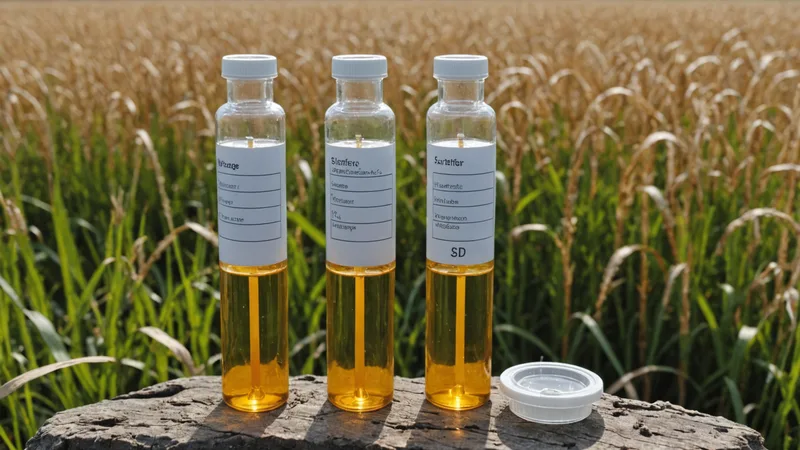
eDNA sampling protocols are not interchangeable. The technical choices made at each stage — filtration volume, membrane pore size, field preservation method, blank controls, PCR primer selection, bioinformatics pipeline parameters — compound into substantial differences in data quality, species detection sensitivity, and comparability between sampling events. For a biodiversity credit program that relies on eDNA to verify ecological outcomes, the protocol is not a technical detail. It is the foundation of the entire evidentiary structure.
Why Protocol Design Matters for Audit-Ready Data
When a corporate buyer purchases a biodiversity credit that is backed by eDNA verification, what they are ultimately purchasing is a chain of documented claims: that water was collected at specific locations under specific conditions, that the collected water was filtered and preserved in a way that retains DNA integrity, that lab extraction and amplification were performed according to validated methods, and that the taxonomic assignments from sequencing are reliable. If any link in that chain is poorly documented or methodologically weak, the entire claim becomes difficult to defend under independent audit.
This is not a hypothetical risk. TNFD-aligned disclosures will increasingly face scrutiny from institutional investors and regulatory bodies who understand that ecological data can be fabricated, cherry-picked, or generated under protocols inadequate to detect relevant species. Designing protocols that are inherently audit-ready — with documented field blanks, replicate sampling, archived raw data, and transparent bioinformatics pipelines — is not optional for a credit program that intends to operate in a maturing compliance market.
Water Volume and Filtration Strategy
For riparian water-column sampling, filtration volume is the primary determinant of low-abundance species detection sensitivity. eDNA concentration in stream water is highly variable — it depends on organism abundance, metabolic activity, distance from the organism, and hydrological transport — but is typically in the range of femtograms to nanograms per liter for individual species in non-extreme conditions.
Our standard protocol filters a minimum of 2 liters per replicate sample per station, using peristaltic pump delivery through 0.2-micron polycarbonate track-etched membranes. The choice of 0.2 microns (rather than the 0.45-micron membranes used in some published protocols) reflects a deliberate decision to capture a broader size range of eDNA particles, including the small DNA-containing vesicles and cell debris that constitute a significant fraction of environmental DNA in turbid riparian environments.
The trade-off is filter clogging in high-turbidity conditions. In winter high-flow events or after rain disturbance, suspended sediment loads in Oregon Coast Range streams can be high enough to clog a 0.2-micron filter within 300–400mL of filtration. Our protocol addresses this with a 20-micron pre-filter deployed in series ahead of the capture membrane, which removes the coarser particulate fraction without excessive nucleic acid loss. Under summer low-flow conditions, this pre-filter is typically unnecessary, but it is included in all field kits as standard equipment.
Preservation and Transport
DNA degradation begins immediately after sampling. In warm field conditions, unpreserved filtered membranes can show detectable nucleic acid loss within hours. We evaluated three preservation approaches during protocol development:
- Longmire's preservation solution (lysis buffer) — immersed filter in solution immediately post-filtration; stable at ambient temperature for 2–3 weeks. This is our primary field method for most sampling campaigns. The buffer lyses cells at the membrane, stabilizing DNA without requiring cold chain.
- Dry silica preservation — air-dried filters in individual silica desiccant sachets. Effective for dry-season sampling when Longmire's solution is impractical (freezing risk in winter). More susceptible to DNA loss from ambient humidity during field loading.
- Liquid nitrogen flash-freeze — maximum DNA preservation but operationally impractical for field campaigns at remote sites. We use this method only for reference samples and protocol validation work at sites with vehicle access to liquid nitrogen supply.
All preserved samples are transported to our processing facility within 72 hours of collection and stored at -20°C until extraction. This cold storage window is documented in the chain-of-custody form that accompanies each sample batch.
Blank Controls and Contamination Management
Contamination controls are the most systematically underemphasized aspect of eDNA protocol design in the field ecology literature — and the most consequential for audit-ready data. A single contaminated sample that produces a false-positive detection for a charismatic species can inflate a BHI score in ways that are very difficult to detect post hoc.
Our contamination management protocol has three components. First, field equipment (syringes, tubing, filter housings) is bleach-sterilized between sites and rinsed with field-grade deionized water. Disposable items (gloves, filter membranes) are used once per sample. Second, field blanks — deionized water sourced from our laboratory and transported to the field in sealed containers — are processed through the complete filtration and preservation protocol at every sampling station. Any detection in a field blank for a target taxon invalidates all positive detections for that taxon from that station. Third, extraction blanks and PCR blanks are run in every laboratory batch; positive signals in blanks trigger rejection of the associated samples and reprocessing from archived filters where available.
A protocol that cannot distinguish genuine detections from contamination artifacts is not fit for credit verification purposes, regardless of how many species it nominally detects.
Primer Selection and Reference Database Coverage
PCR primer selection determines which taxonomic groups are amplified from the extracted DNA — and which are missed. No single primer set provides comprehensive coverage across all taxa simultaneously; primer design involves inherent trade-offs between amplification breadth and specificity. Our riparian protocol uses a multi-primer approach:
- 12S rRNA primers (MiFish universal) for fish detection — validated for Pacific Northwest salmonid species including all Oncorhynchus species, sculpin, and suckers
- 16S rRNA primers for amphibian detection — covers Oregon and Washington Caudata and Anura, with particular sensitivity to Dicamptodon, Rhyacotriton, and Ascaphus genera that are ecologically significant in Coast Range and Cascades riparian systems
- COI (cytochrome oxidase I) primers for macroinvertebrate detection — EPT families are our primary target, using the BF3/BR2 primer pair that provides good coverage of Ephemeroptera and Trichoptera at family level
Reference database completeness is a genuine limitation across all eDNA programs. For some taxa — particularly recently described species or species with limited prior genetic sampling — reference sequences may be absent from public databases (NCBI GenBank, BOLD), leading to unassigned reads that may represent genuine detections of ecologically relevant organisms. We maintain a supplementary regional reference library for Pacific Northwest aquatic species, drawing on published literature and, where available, tissue voucher specimens from museum collections, to improve assignment rates for Oregon-endemic taxa.
Replicate Structure and Sampling Effort
The number of replicate samples required to achieve reliable species detection depends on the target taxa, their abundance, and the physical characteristics of the sampling environment. For our standard riparian protocol, we collect a minimum of three replicates per station, which species accumulation curve modeling for low-to-moderate diversity Pacific Northwest streams suggests is sufficient to capture approximately 85–90% of detectable vertebrate taxa present at ambient summer-low-flow densities.
We require a minimum of five stations per enrolled site for a monitoring event to produce a valid BHI score update. Sites where fewer than five stations can be sampled in a single field visit due to access constraints require a documented justification and a reduced-confidence flag on the resulting BHI score. This is an explicit quality gate in our verification framework, not a soft preference — it exists because spatial coverage within a site is necessary to distinguish localized detections from site-wide community presence.