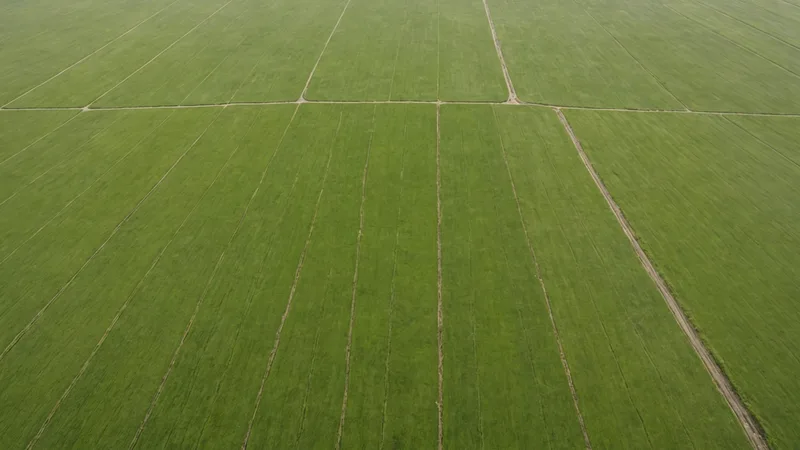
The global biodiversity credit market increasingly denominated in hectares — hectares planted, hectares protected, hectares restored. That unit of measurement is convenient, auditable from satellite imagery, and almost entirely beside the point. Habitat area tells you something about potential. It tells you nothing about whether that potential has been realized in the form of actual species returning to a functioning ecological community.
The Hectare Illusion
When a restoration project plants 200 hectares of native conifers along a degraded riparian corridor, the certificate says 200 ha. What it does not say is which macroinvertebrate communities returned to the hyporheic zone, whether salmonid-supporting benthic invertebrate assemblages re-established at sufficient density, or whether the restored canopy actually shifted the acoustic environment from wind-dominated to biophony-dominated — a shift that ecologists recognize as a signature of functional recovery, not just vegetative cover.
This gap is not a minor bookkeeping issue. It is the central credibility problem in voluntary biodiversity markets. Buyers purchasing credits to meet GBF Target 15 obligations or TNFD nature-related disclosure commitments are, in most cases, purchasing a claim about area that has been weakly proxied to a claim about ecological outcome. The proxy relationship is assumed, not measured.
A 200-hectare plantation of single-species Douglas fir and a 200-hectare old-growth remnant both score identically in a habitat-area accounting framework. The species richness difference between them may be an order of magnitude.
What the Science Actually Shows
Species-area relationships — the well-established ecological principle that larger habitat patches support more species — are real. But they describe equilibrium conditions across landscape scales. They do not predict community composition during restoration, which is a non-linear, temporally extended process subject to dispersal limitation, priority effects, and legacy soil conditions that area-based metrics cannot capture.
Occupancy modeling work in Pacific Northwest riparian systems has consistently shown that species return to restored corridors at rates that are highly sensitive to connectivity with source populations, micro-hydrological conditions, and substrate quality — none of which are visible in a satellite-derived habitat patch polygon. A 50-hectare restoration that is hydrologically connected to an intact floodplain will commonly support more functionally distinct species after three years than an isolated 300-hectare block that lacks that connectivity.
Shannon diversity index values calculated from eDNA metabarcoding at comparable Oregon coast range riparian sites show variance coefficients well above 40% across sites of nominally similar habitat area and restoration age. In other words, area explains a minority of the variance in measurable biodiversity outcomes. The majority is explained by factors that require biological measurement to assess.
eDNA as Direct Measurement
Environmental DNA metabarcarcoding works by filtering water or soil samples for genetic material shed by resident organisms — skin cells, mucus, feces, gametes — then amplifying and sequencing that material against curated reference databases. The result is a species detection profile for the sampled site that is genuinely orthogonal to any habitat area estimate. It measures biological presence, not proxy conditions.
For riparian systems specifically, water-column eDNA sampling captures vertebrates, macroinvertebrates, and microbial communities simultaneously in a single field operation. A standard Biodivex riparian sampling campaign collects water from multiple longitudinal positions along a 1-kilometer reach, filters through 0.2-micron membranes, and extracts DNA for sequencing against a reference library that includes Oregon-endemic amphibians, salmonid species, and benthic macroinvertebrate families. The resulting species accumulation curve reaches asymptote within approximately 3-4 replicate samples per reach — a sampling effort that is operationally achievable in a single field day.
Critically, eDNA detection is not subject to observer bias or weather-dependent detection probability in the way that traditional visual transect surveys are. It produces a reproducible, archived record: the raw sequence reads, the denoising pipeline outputs, and the taxonomic assignments are all audit-ready. A corporate buyer reviewing documentation can verify the methodology independently; they cannot do the same for a field biologist's bird count.
The Counter-Argument Worth Taking Seriously
We are not arguing that habitat area is irrelevant. Area matters enormously for long-term persistence of populations — minimum viable population theory has a solid empirical foundation, and landscape-scale connectivity cannot be ignored. A very small, isolated eDNA-rich patch may show impressive species richness in year one that collapses in year five as source populations are extirpated. This is the permanence problem in biodiversity credits, and it is real.
What we are saying is that area alone is insufficient as the measurement unit for credit issuance. A credit represents a claim that a specific quantum of biodiversity uplift occurred. Habitat area is a claim about potential conditions. eDNA measurement is a claim about observed biological presence. These are categorically different assertions, and only one of them should anchor a market instrument.
The appropriate use of area data is as a contextual input for site permanence assessment — larger sites with better landscape connectivity have a lower extinction debt and therefore lower permanence risk, which is relevant for credit vintage and re-verification intervals. But area should follow biology in the credit structure, not substitute for it.
Implications for Credit Market Design
If credit buyers are to have confidence that their biodiversity purchases represent genuine ecological outcomes, the market needs a measurement standard anchored to directly observed biological presence. The TNFD LEAP approach explicitly calls for companies to locate and evaluate their nature-related dependencies and impacts — language that implies species-level evidence, not habitat proxies. GBF Target 15 monitoring and reporting requirements similarly point toward outcome-based assessment. The regulatory trajectory of biodiversity markets is converging on the same conclusion that ecology has held for decades: you have to measure the organisms.
At Biodivex, every credit issued through our marketplace is anchored to a BHI score derived from eDNA species detection and acoustic index data, not area alone. We carry hectarage as a contextual field in our credit data schema because it is relevant to permanence analysis, but it is not the numerator of the credit calculation. The numerator is the measured biodiversity delta from a documented baseline.
Markets built on biological measurement will produce better conservation outcomes than markets built on proxy geometry. They will also, over time, produce more defensible disclosures — because the species-level evidence is there when an auditor or regulatory body asks for it. In a world where CSRD and TNFD reporting are converging on mandatory nature disclosure, that auditability difference will matter considerably.